Sievertsov Oleksii Mykolaiovych
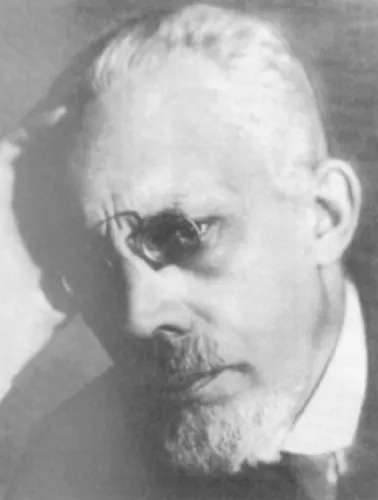
SIEVERTSOV Oleksii Mykolaiovych (11(23). 09. 1866, Moscow — 19. 12. 1936, same place) — zoologist, anatomist, evolutionist. Academician of the USSR Academy of Sciences (1920) and the Ukrainian SSR Academy of Sciences (1925). K. Ber Prize of the Russian Academy of Sciences (1919). Graduated from Moscow University (1889, awarded a gold medal for the scientific work “Summary of Information on the Organization and History of the Development of Gymnophiona”), where he also worked: from 1893 — privat-docent. During his professional career, he visited many countries for scientific purposes, including spending time on assignment in France, Germany, Italy in 1896–98, in Greece and Egypt in 1904, and in Switzerland in 1914. In 1898, he defended his doctoral dissertation “Essays on the History of the Development of the Vertebrate Head. 1. Metamerism of the Head of the Electric Ray”. From 1898 to 1902 — extraordinary Professor of the Department of Zoology at Yuriev University (now Tartu, Estonia); from 1902 to 1911 — full Professor of the Department of Zoology and Comparative Anatomy at St. Volodymyr University in Kyiv; concurrently — lecturer on the history of evolutionary doctrine at the Higher Womenʼs Courses. From 1911 to 1930 — professor, head of the Department of Zoology at Moscow University. In 1930, he founded the Laboratory of Evolutionary Morphology (now the S. Severtsov Institute of Ecology and Evolution Problems of the Russian Academy of Sciences, Moscow). Full member of the Russian Society for the Acclimatization of Animals and Plants (1915), honorary member of the All-Russian Society for Nature Protection (1924), the Kyiv Society of Naturalists (1925), corresponding member of the Zoological Society in Vienna (1926). Founder (1916), executive editor (1916–35) of the “Russian Zoological Journal”. Member of the editorial board of the “Great Soviet Encyclopedia” (1926–30). Founder of a separate direction in biology — evolutionary morphology, a follower of Darwinism. The works of Sevértsov and his students expanded the understanding of the patterns of the evolutionary process, significantly influencing the development of embryology, histology, evolutionary physiology, and anthropology. He formulated the currently generally accepted theory of the origin of the pentadactyl limb and paired fins from the 7–10-rayed limb of ancestors. Author of teachings on the types (modi) of phylogenetic changes in organs and functions, and phylogenetic correlations (coordinations). He described the main directions of biological progress: aromorphosis — an increase in the intensity of an organismʼs vital activity, idioadaptation — partial adaptation to living conditions, as well as coenogenesis and general degeneration. He developed the theory of phylembryogenesis, according to which evolution occurs through changes in ontogenesis.
Additional Information
- Major Publications
- Otnosheniya mezhdu evolyutsiey zhivotnykh i ikh embrionalnym razvitiem // Protokoly zasedaniy Kiev. ob-va estestvoispytateley za 1910 g. K., 1910; Etyudy po teorii evolyutsii: Individualnoe razvitie i evolyutsiya. K., 1912; Berlin, 1921; Sovremennye zadachi evolyutsionnoy teorii. Moskva, 1914; Issledovaniya ob evolyutsii nizshikh pozvonochnykh // Rus. arkh. anatomii, gistologii i embriologii. 1917. Vol. 1, vyp. 3; Evolyutsiya i psikhika. Moskva, 1922; Glavnye napravleniya evolyutsionnogo protsessa: (Progress, regress i adaptatsiya). Moskva, 1925; Morfologicheskie zakonomernosti evolyutsii. Moskva; Leningrad, 1939.

